
Junior ethicalhacker: CFC L1
Learn. Explore. Defend. Build the Future.
A structured cybersecurity program for young learners interested in tech and ethical hacking. It covers fundamentals through concepts, demos, activities, and hands-on challenges.

Pathway Ahead
This program builds a foundation for future global cybersecurity certifications like the EC-Council Certified Ethical Hacker.
Programmes for Cyber Security
Nothing fancy. If you have a laptop and internet, you're ready. Every tool we use is free or on a free tier.
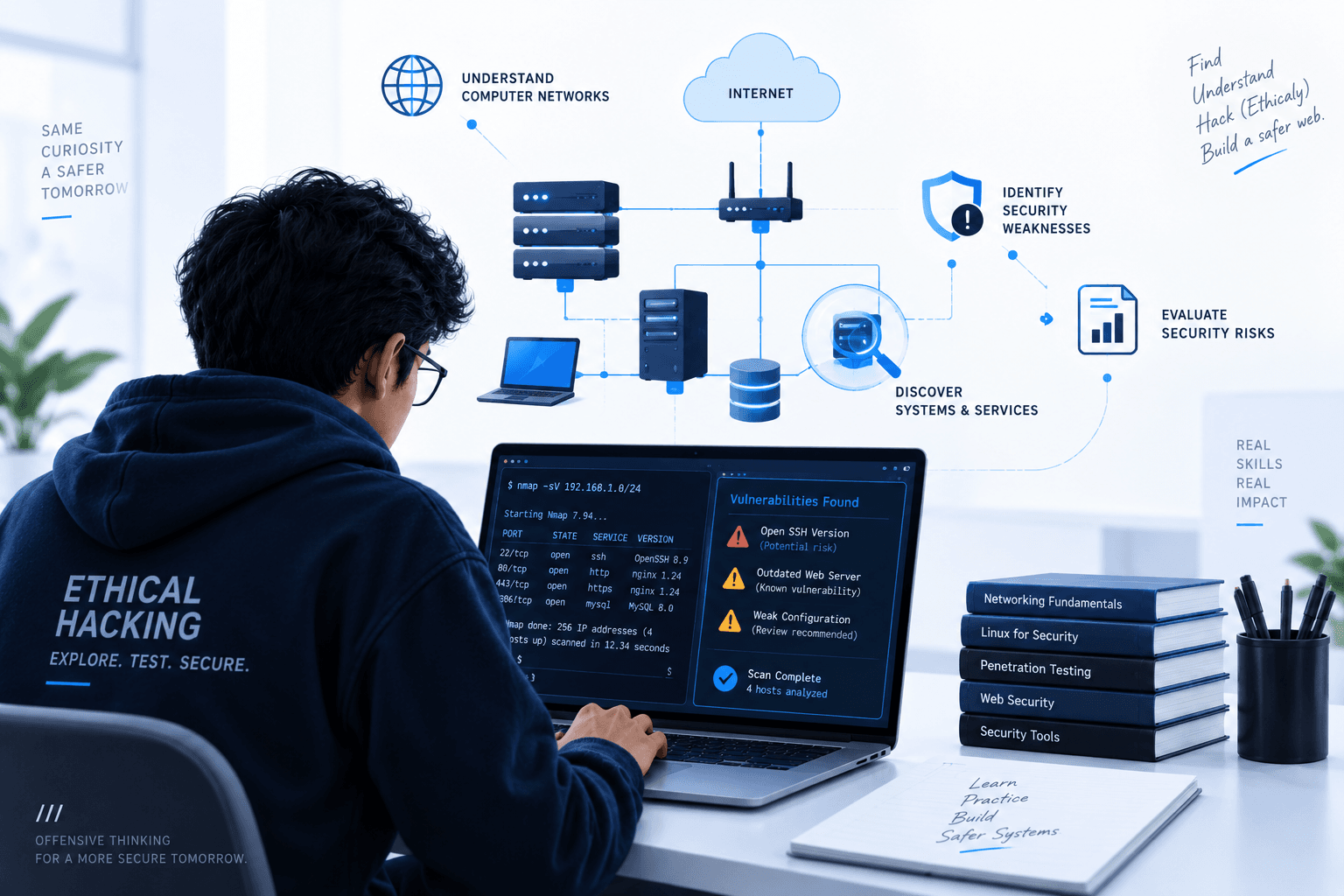
Cyber Security Foundation – Red Track
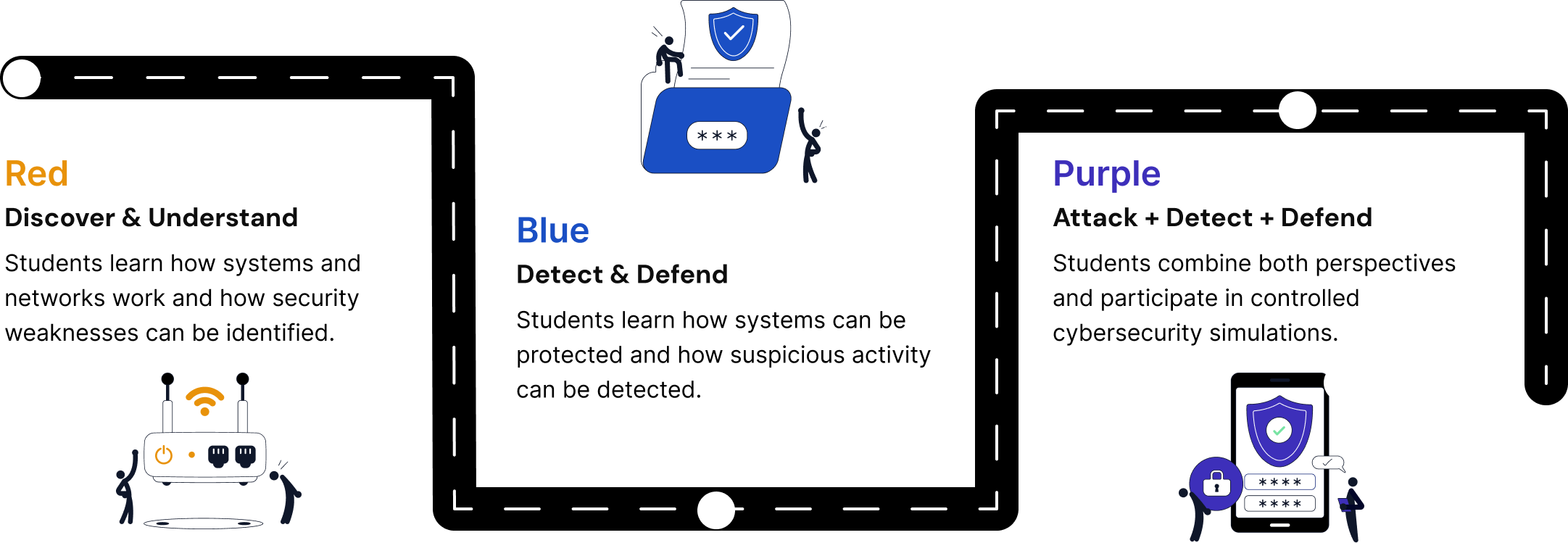
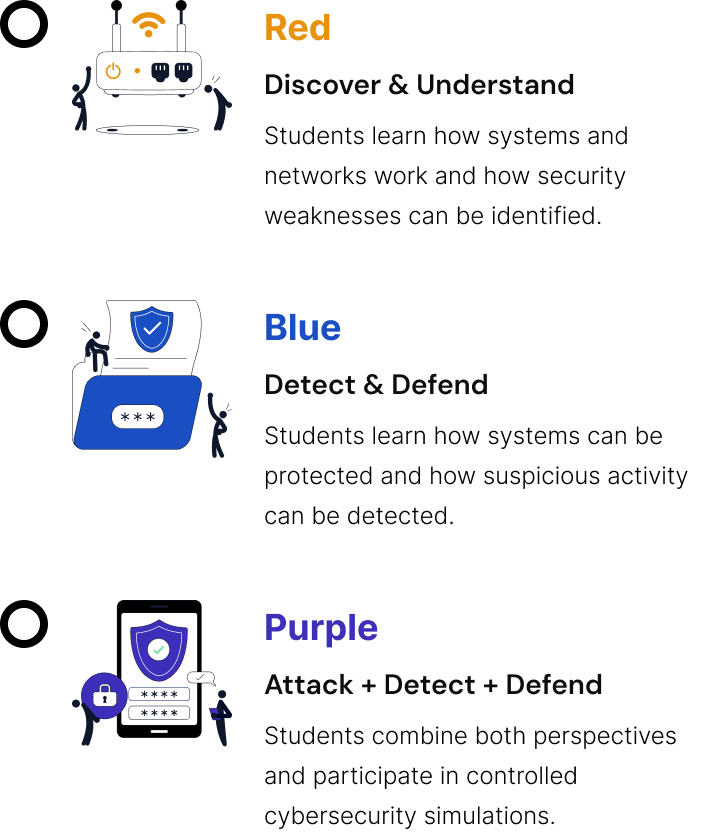
The Red Team pathway introduces students to the mindset of an ethical security tester. Students learn how to understand computer networks, discover systems and identify vulnerabilities.
Computer Networking Fundamentals | 24 Sessions | ₹80,000
Cyber Security Foundation – Red Track
The Red Team pathway introduces students to the mindset of an ethical security tester. Students learn how to understand computer networks, discover systems and identify vulnerabilities.
Computer Networking Fundamentals | 24 Sessions | ₹80,000
Module 01 of 06
Cybersecurity Foundations
Sessions 1–4

Introduction to Cybersecurity
Threats, Vulnerabilities and Exploits
CIA Triad – Confidentiality, Integrity & Availability
Passwords, Authentication & Account Security
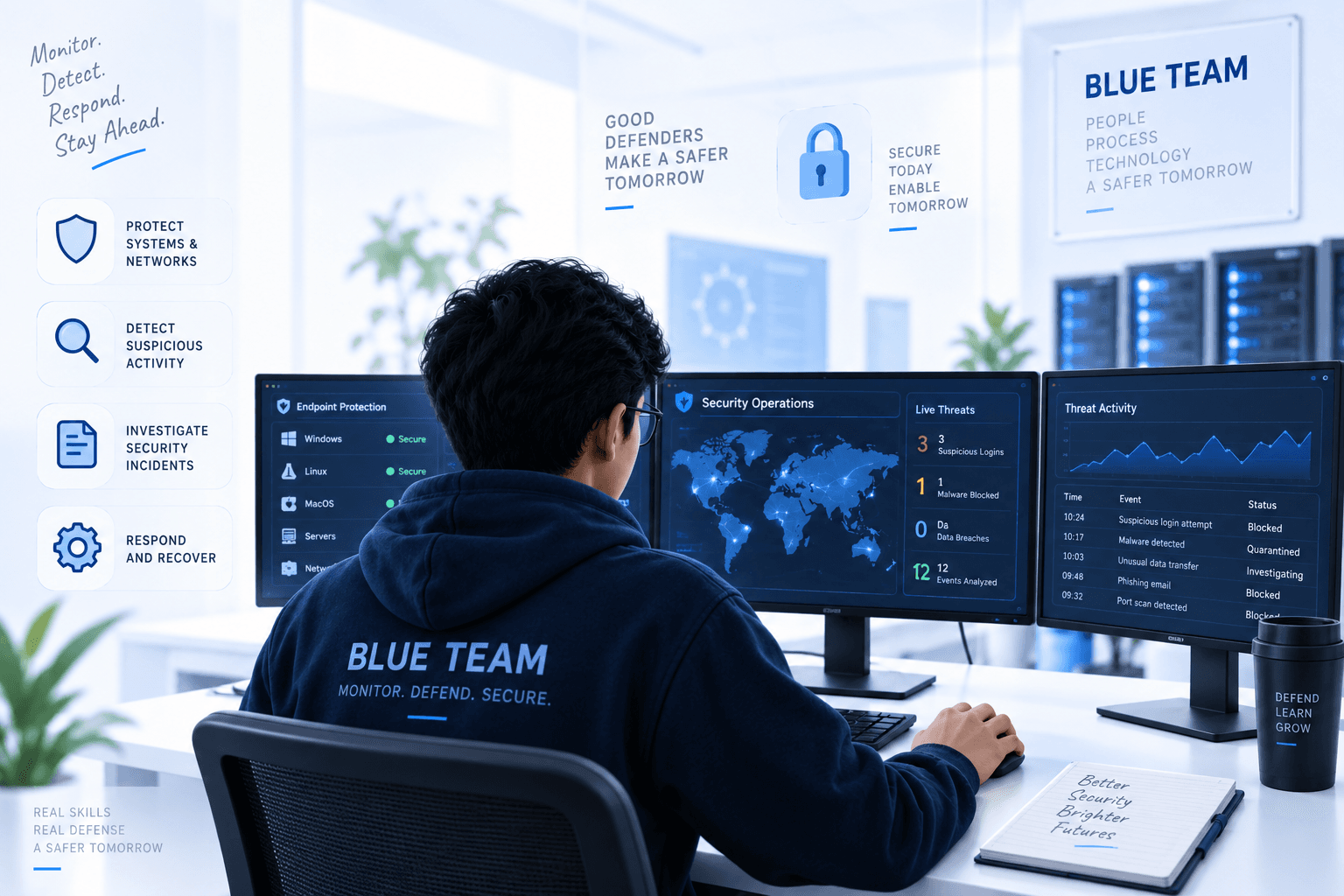
Cyber Security Foundation – Blue Track
The Blue Team pathway introduces students to the defensive side of cybersecurity. Students learn how computers and networks can be protected, how suspicious activity can be detected.
Ethical Hacking & Security Discovery | 24 Sessions | ₹80,000
Cyber Security Foundation – Blue Track
The Blue Team pathway introduces students to the defensive side of cybersecurity. Students learn how computers and networks can be protected, how suspicious activity can be detected.
Ethical Hacking & Security Discovery | 24 Sessions | ₹80,000
Module 01 of 06
Security & Protection
Sessions 1–4
Introduction to Cyber Defense
Security Policies & Safe Computing
Password & Account Protection
Updates, Patches & Software Security
Elite: Cyber Security Foundation – Purple track
The Purple Team pathway merges offensive and defensive cybersecurity knowledge. Students explore cyber-attacks and defenses via coordinated exercises in secure, controlled environments.
Red Team + Blue Team Integration | 32 Sessions | ₹1,25,000
Elite: Cyber Security Foundation – Purple track
The Purple Team pathway merges offensive and defensive cybersecurity knowledge. Students explore cyber-attacks and defenses via coordinated exercises in secure, controlled environments.
Red Team + Blue Team Integration | 32 Sessions | ₹1,25,000
Module 01 of 06
Purple Team Foundations
Sessions 1–4
Introduction to Purple Teaming
Red Team vs Blue Team
Understanding the Cyber Attack Lifecycle
How Defenders Detect Attacks

Your learning journey
Nothing fancy. If you have a laptop and internet, you're ready. Every tool we use is free or on a free tier.
Tools and technology
Each app works, looks good on a phone, and belongs to the student — perfect for a portfolio, a school project, or showing family.
01
Networking & Discovery
- Nmap
- Wireshark
- Burp Suite
- ARP tools
- Network discovery utilities
02
Web & Security
- Browser Developer Tools
- HTTP/HTTPS analysis
- Web security testing tools
- Vulnerability assessment tools
03
Defensive Security
- Nmap
- Wireshark
- Burp Suite
- ARP tools
- Network discovery utilities
04
Security Knowledge
- CVE
- CWE
- CVSS
- OWASP security concepts
Hands-On Learning
The program focuses on learning by doing. Students are introduced to cybersecurity concepts through:

Guided Learning
Follow step-by-step security demonstration
Windows Security
Hone security skills in Windows.
Network Basics
Investigate networks and devices.

Security Labs
Safely practice in lab settings.
Network Discovery
Explore devices and network setups.

Web Security
Secure and test websites effectively.

Security Investigation
Investigate incidents for security insights.

CTF Challenges
Solve puzzles to find hidden flags.

Security Puzzles
Enhance skills with engaging security tasks.
Attack & Defend
Experience offensive and defensive security.

Final Challenge
Put your cybersecurity skills to the test.
Practical safety and ethics
Ethical responsibility is an important part of the program. Students are taught that cybersecurity tools and techniques must only be used against:

Their own systems
Devices, networks, and applications they personally own or manage.

Training zones
Safe, isolated setups built specifically for learning and practice.
Labs with access
Controlled labs where security testing is explicitly permitted.

Permitted systems
Systems where the owner has clearly granted permission to test.
Final Outcome
The program focuses on learning by doing. Students are introduced to cybersecurity concepts through:

Computer Security

Vulnerability Awareness

Networking

Security Investigation

Ethical Hacking

Attack Detection

Cyber Defense

Incident Response

Computer Security

Vulnerability Awareness

Networking

Security Investigation

Ethical Hacking

Attack Detection

Cyber Defense

Incident Response
The objective
The objective is not simply to teach students how to use cybersecurity tools. It is to help them develop the ability to:
Tech Savvy
Gain a solid understanding of the fundamental concepts of technology.
Hacker Mind
Recognize vulnerabilities from the perspective of an attacker.
Spot Threats
Identify common cyber threats and their associated warning signs.
Safe Systems
Learn effective strategies to secure both devices and networks.
Solve Challenge
Apply your skills to tackle real-world security challenges effectively.
Responsible Hack
Develop your cybersecurity skills in an ethical and responsible manner.

Register now for the Cybersecurity Programme
We keep batches at 7–9 students so every child gets real attention from the instructor. Seats fill quickly.